We are with you
CHALLENGES HELP YOU GROW
Managing a multinational fleet involves navigating a web of diverse data sources and reporting requirements.
DATA
Typical challenges of global fleet reporting
Diverse Data Sources
Multinational companies often work with over 10 different data sources, including various suppliers, telematics systems, and internal databases. Consolidating this data into a single, coherent format is a daunting task. Each data source may have its own format, frequency of updates, and level of detail, making it difficult to create a unified view of the fleet's performance.
Outdated and Inconsistent Data
Many companies still rely on Excel spreadsheets or rudimentary data sets to manage their reporting requirements. This approach often leads to out-of-sync and outdated information, making it difficult to generate accurate reports. Manual data entry and consolidation are time-consuming and prone to errors, further exacerbating the problem.
Compliance with Reporting Standards
Different countries have different reporting standards, and keeping up with these requirements can be overwhelming. Non-compliance can result in hefty fines and damage to the company's reputation. Companies must navigate a complex landscape of regulations, which can vary not only by country but also by region within a country.
Data Security and Privacy
With the increasing amount of data being collected and processed, ensuring data security and privacy is a significant challenge. Companies must comply with data protection regulations such as GDPR in Europe, which imposes strict requirements on how personal data is handled.
Operational Efficiency
Managing a multinational fleet requires efficient coordination and communication between different regions and departments. Without a centralised reporting platform, it can be challenging to ensure that everyone has access to the same information and is working towards the same goals.
DATA
Current solutions and their limitations
To manage the challenges of their global fleet reporting requirements, many companies use a combination of manual processes and multiple systems. However, these solutions have significant limitations:
Manual Processes
Relying on manual data entry and consolidation is time-consuming and prone to errors. It also makes it difficult to keep data up-to-date. Manual processes are not scalable and can become a bottleneck as the company grows and the volume of data increases.
Multiple Systems
Using different systems for different regions or suppliers can lead to data silos, making it challenging to get a holistic view of the fleet's performance. Data silos can result in duplication of efforts, inconsistencies in reporting, and a lack of transparency.
Lack of up-to-date Insights
Without a centralized platform, companies struggle to gain up-to-date insights into their fleet operations, hindering their ability to make informed decisions. Up-to-date data is crucial for identifying trends, monitoring performance, and responding to issues promptly.
Limited Analytical Capabilities
Many existing solutions lack advanced analytical capabilities, making it difficult to derive meaningful insights from the data. Companies may have to rely on basic reporting tools that do not provide the depth of analysis needed to support strategic decision-making.
Integration Challenges
Integrating data from multiple sources can be complex and time-consuming. Companies may face technical challenges in connecting different systems and ensuring that data flows seamlessly between them.
Reflect on your current central reporting state
Connect and integrate your data & your LeaseCo data





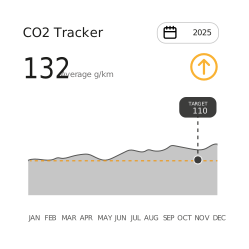
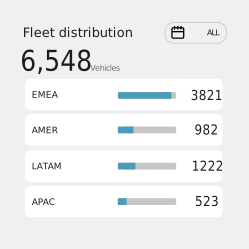
Visualise your metrics and target emerging trends over time